


From Sound Logos to Audio Identity: Why Strong Brands Need an Audio System 🧬⚙️

Aktualisiert: 20. Mai
Content is created faster today than ever before. With AI, text, images, videos, and campaign variations can be produced in no time. This brings efficiency, but also a challenge: things are becoming more interchangeable. ⚠️
That is precisely why proprietary brand assets are gaining value. They make brands distinctive and ensure that communication doesn’t become generic.
Audio is a particularly powerful asset. That’s because brands today are not only seen but also heard—in social clips, podcasts, apps, voicebots, AI agents, service hotlines, events, or at the point of sale.
It’s in all these places that it’s decided whether your brand remains clearly recognizable in every conversation. 💬
Audio Identity Makes Brands Audibly Distinctive
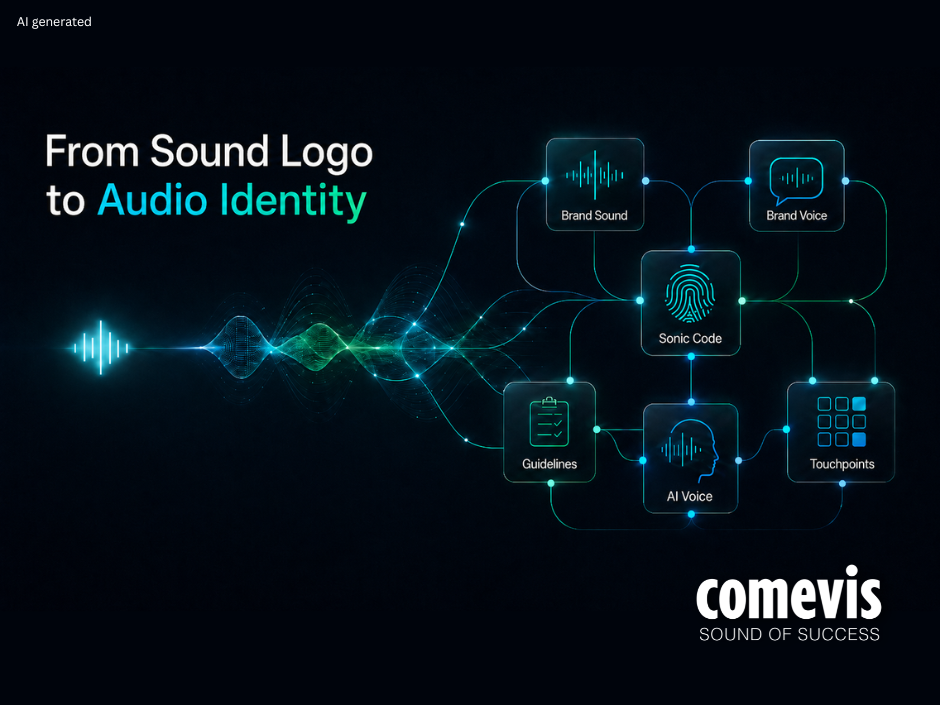
An audio identity 🧬—also known as a sound identity—describes a brand’s audio identity. It encompasses all auditive elements that make a brand uniquely recognizable: sound logos, brand sounds, brand voices, AI voices, sound scapes, and audio guidelines.
The goal: Your brand shouldn’t sound different every time. It should be true to the brand, consistent, and emotionally engaging across all channels—for strong audio dialogues in branding, sales, and service.
From Sound Logo to Audio System
A sound logo 🎵 is often the first step. It’s short, concise, and captures the essence of the brand in just a few seconds. But a sound logo alone isn’t always enough. A social media clip requires a different approach than a podcast intro. A voicebot needs a different one than an event or a product video.

“A sound logo is catchy. An audio system makes a brand memorable. Only when brand sound, brand voice, and sonic code work together does an audio identity emerge that resonates across all touchpoints and comes to life in every interaction.”
Björn Wegener, comevis
Lead Brand & CX Audio Communications
This is how individual audio assets become a consistent audio system 🧩—flexible enough for different channels and clear enough for strong brand communication.
Why Audio Is Becoming More Important in the Age of AI
The more generic content there is, the more important unique brand codes become. The Ehrenberg-Bass Institute describes such Distinctive Brand Assets as codes that make brands more recognizable and memorable. In addition to visual guidelines, these include sound logos, brand sound, and brand voice.
Audio is the shortcut to the customer: 🚀 immediate, emotional, and intimate. Voices, melodies, rhythm, and sounds can create a sense of closeness, trigger memories, and emotionally anchor brands. The 2023 Audio Effect Study shows that audio can strengthen a brand’s mental availability—that is, the likelihood that a brand will be recalled in relevant situations where a need arises.
Especially as AI makes communication more conversational and natural interaction between AI and humans becomes more relevant, a clear audio identity is essential. 🤝 It protects brands from becoming interchangeable and makes their identity tangible even in automated dialogues.
Why Audio Identity Needs to Be Managed
For audio to have a lasting impact, it requires clear guidelines, centralized assets, and ease of use. Audio guidelines, brand sound libraries, and audio brand management 🗂️ help teams find the right elements and use them in a way that aligns with the brand. This is especially important when many employees work with audio.
This ensures your audio identity remains consistent—from individual sound logos to audio systems. At the same time, audio becomes scalable, measurable, and easier to use in everyday life.
Best Practices with a Lasting Impact
Audio identity doesn’t just stay in the brand manual. It is heard, used, and experienced. 🗣️
Our best practices show how brands use sound logos, brand sound, brand voice, sonic code, and audio brand management to build a consistent audio system—from individual auditive assets to a scalable brand universe.
Whether it’s HELLA, VGH, DFB (German Football Association), Studiosus, DEVK, or Würth: Strong brands don’t use audio by chance. They make their identity audible and applicable for communication that fits every dialogue about the brand.
Conclusion: Strong Brands Don’t Just Sound That Way by Chance
An audio identity is a system. ⚙️
It provides guidance, reinforces recall, prevents brands from becoming interchangeable, and brings brands to life across all touchpoints.
Make your brand unmistakably recognisable. ⭐
comevis develops audio identities or sound identities that make brand values audible and effective across all touchpoints—strategically, scalably, and automatically.


